| Change page: < 1 2 3 > | Displaying page 1 of 3, items 1 to 10 of 25. |
|
2012 Mercedes-Benz E63 AMG Wagon Review, Specs, & Pictures
|
|
|
| NEWS & REVIEWS |
We were very impressed with the high-performance 2012 Mercedes-Benz E63 AMG Wagon, and that’s no easy feat for a five-door wagon. The powerful AMG did not feel like a wagon and most certainly did not perform like a wagon. It is as cool as any station wagon will ever get, ensuring any owner will be the envy of every other parent at their child’s school. The new-for-2012 E63 AMG Wagon features a 5.5-liter V-8 engine, also seen in the sedan, which generates 518 hp and 516 lb-ft of torque. The 5.5 liter replaces AMG’s naturally aspirated 6.3-liter V-8. Our test car had the AMG Performance Package, boosting its performance numbers to 550 hp and 590 lb-ft of torque. The extra power comes from an increase in turbocharger pressure from 14.5 to 18.8 psi. The new engine features a number of small tweaks that have reduced the E63’s fuel intake by 22 percent. A small part of this efficiency has to do with the Eco Stop-Start system, also seen on the S63 we tested. When the transmission is in Controlled Efficiency Mode and comes to a complete stop, the engine will automatically turn off to save fuel. The accompanying restart in a E63 we tested felt a little jumpy, but, in the new station wagon, this was not an issue, and the restart was almost instantaneous. We liked the car was its smooth delivery of power, and, like with most AMGs, you can hear a unique “bark” backfire from the exhaust during full-throttle acceleration. The E63 comes with the AMG’s seven-speed multi-clutch transmission; Replacement of the transmission’s torque converter with a start-up clutch offers not only versatility but also faster shift times. The 2012 E63 AMG Wagon also has a lot of safety features including Active Lane Keeping Assist and Active Blind Spot Assist. Active Lane Keeping Assist works by alerting the driver when they are drifting via vibrations through the steering wheel. Active Blind Spot Assist monitors both blind spots behind and to the side of the car. It works whenever a turn signal is activated by giving the driver visual and audible warnings when another vehicle is in its blind spot. If the driver ignores the warning, the manufacturer has installed an intervention feature for both Active Lane Keeping Assist and Active Blind Spot Assist, in which ESP braking will automatically correct the car’s course of travel. The interior of the E63 wagon lives up to the Mercedes name by being quite luxurious! The interior’s materials comprise Alcantara for the headliner, leather, and a carbon-fiber equivalent. The carbon-fiber on the outside also matches the carbon-fiber on the inside. The panorama sunroof is absolutely incredible because it’s a multi glass panels that offer the benefits of a sunroof to the front and rear passengers. Another cool feature about the car is its interior lighting, which lights up the AMG logo in various inconspicuous spots such as the doorsills. The only negative thing we found was that it did not offer any more rear legroom than the sedan. With its powerful V-8 and grocery-getting abilities, the E63 Wagon fits a small niche in the marketplace, which may be why it is available via special order only. It will be interesting to see how the Mercedes AMG wagon fares in the marketplace. By Tabitha Foss
|
|
| PHOTOS: click photos to enlarge |
|
|
|
|
|
|
2012 McLaren MP4-12C Hennessey HPE800 Twin Turbo Review, Specs, & Pictures
|
|
|
| NEWS & REVIEWS |
McLaren’s self-developed 3.8-liter twin-turbocharged V-8 produces a stout 592 hp, which is enough for many except the possibly fanatical tuners over at Hennessey Performance. Its latest project has the just-appearing-in-showrooms 2012 McLaren MP4-12C now producing 800 hp, which seems a tad tame when compared to the number of cars with crazy outputs it has been advertising lately.
The HPE800 package for the 2012 MP4-12C includes upgraded turbochargers, clutches, waste gates and blow-off valves, and fuel and engine management systems in addition to a new titanium exhaust, intercooler, air intake, and transmission cooler. Other modifications include an aerodynamic body kit, new wheels and tires, and an upgraded interior.
“I spent a lot of time around the new 12C at the 2011 Goodwood Festival of Speed and was very impressed,” said President John Hennessey. “We’re excited to have the opportunity to take a great car and give it our own special performance touch while giving 12C owners a uniquely aggressive appearance.”
Hennessey admitted that the factory suspension and braking system were left alone because it would be difficult to improve upon. The improvements can be ordered as a complete package or a la carte. No word on pricing.
by Benjamin Greene
|
|
| PHOTOS: click photos to enlarge |
|
|
|
|
|
|
2012 Chevrolet CAPRICE Police Patrol Vehicle Review, Specs, & Pictures
|
|
|
| NEWS & REVIEWS |
|
Maybe it stems from child’s play, but with every major magazine running tests on the latest Chevrolet police car, it appears that there is something inherently appealing with the Australian-based patrol vehicle. So, when we first noticed the Chevrolet Caprice Police Patrol Vehicle (PPV) sitting in a parking lot adjacent to our building in Saint Petersburg, Florida, we had to do a little snooping to see why it was there.
The Caprice PPV we noticed was from a local municipality, the Largo Police Department, and was being prepared for active duty by a local electronics vendor. It is one of only two the Largo Police Department has received, and one of four that we found in the Tampa Bay area.
We spoke to Deputy Chief Jeff Undestad of the Largo Police Department, who was more than happy to share its latest tool in the fight against crime. Its first PPV, an unmarked cruiser, passed under our radar and has been undergoing tests for the past few months. Despite only having the new PPV for a short time, Undestad’s eyes show a gleam of praise for the Caprice. His praise is substantiated by GM’s own trails with the police-dedicated vehicle.
“The all-new 2011 Chevrolet Caprice Police Patrol Vehicle (PPV) is faster from zero to 60 and zero to 100 miles per hour, achieves a higher top speed, and stops in a shorter distance than its competitors from Ford and Dodge." said GM in a press release after the car underwent testing by the Michigan State Police Evaluation Program.
Undestad was upfront with what he liked and disliked about the new Caprice PPV thus far. It is a full eight inches shorter than the car it replaces, the Ford Crown Victoria, but Undestad says it provides more legroom at both the front and rear and has a bigger trunk. He also praised its dual batteries, visibility, and the way it handles—the last may have to do with its smaller size. His only complaints: He wishes the shifter was on the column, not the floor, and that the car was wider. His comments are testament to how much thought needs to go into these mobile workstations.
“We asked for a lot of feedback from our police customers, which helped us develop a vehicle that is superior to the Crown Victoria in key areas,” said Jim Campbell, general manager for GM Fleet and Commercial Operations.
For example, the seats feature a special cutout for the equipment belt, and are formed of a foam that contours to the various items coming off the belt.
Built in Australia and shipped over specifically for police duty, the Caprice PPV stands out, as much as any inconspicuous Chevy, because it is not available for public consumption. It is a full-size, rear-drive sedan currently offered with a 6.0-liter V-8 with cylinder deactivation technology. The engine produces 355 hp and 384 lb-ft of torque, and can send the car to 60 mph from a standstill in less than six seconds. A V-6 will also become available this year, but Largo, and another local department, the Clearwater Police Department, said they will keep any purchases to the V-8.
Being quick is a plus, but the car also has to hold up to the stresses of police duty. To remedy this, GM’s 9C1 police package features a high-output alternator; engine oil, transmission, and power steering coolers; heavy-duty suspension components; large, four-wheel disc brakes with heavy-duty brake pads; and a police-calibrated stability control system.
Largo plans to transition from the Crown Victorias to the Caprice PPV within the next five to six years, picking it over the new Dodge Charger Pursuit vehicle because of the Charger’s smaller trunk and interior size. The department ordered the PPV as soon as it could, but delays from both GM and vendors responsible for preparing the car for police duty slowed the process significantly. As Undestad explains, last minute changes made by GM kept affecting vendors’ fabrication processes, resulting in many vendors waiting until the last minute to design the necessary police gear.
Undestad isn’t the only that has noticed the delays. Rick Carnley, assistant director of solid waste and general services for the Clearwater Police Department, who helps oversee the fleet purchases, said it took GM 10 months to deliver its two test vehicles, and he has real concerns about GM’s ability to deliver any future purchases in a timely manner. He compared his wait negatively to Chrysler’s usual delivery time of 60–90 days.
GM confirmed that it is taking them longer to deliver the car. Besides the ship time from Australia to California, the Caprice also must pass an importation process and get equipped with the necessary factory police gear before it is delivered via train to the dealer. GM says it currently takes them approximately five months to deliver the cars once the order is received.
Beyond these delays, most stations we spoke with were anxiously awaiting their PPVs to arrive to start testing. With its powerful yet economical V-8 and spacious design yet smaller exterior size, something tell us we will be seeing a lot more of these vehicle in the next few years. How much will these new cruisers cost taxpayers? Nothing more than has already been budgeted for regular cruiser replacement. But, if you must know, Largo paid $28,329 for the 2011 Chevrolet Caprice PPV that we photographed; this is a small discount from its $32,366 as-optioned price.
by Benjamin Greene
|
|
| PHOTOS: click photos to enlarge |
|
|
|
|
|
|
2012 Ferrari 599 XX Evolution Review, Specs, & Pictures
|
|
|
| NEWS & REVIEWS |
|
The 599XX got a slight makeover for the new year in the form of a package that includes performance enhancing technical features available to clients participating in the Ferrari Corse Clienti track-based research and development program for the 2012–2013 seasons. It is called the 599XX Evolution. It will feature more power, a new set of Pirelli tires, and an active aerodynamic package that’s integrated into the vehicle’s electronic control systems.
In order to get this package, you need to already have a 599XX, which was only available to clients of the Ferrari Corse Clienti program. The Ferrari 599 is one of the greatest grand touring cars Ferrari has ever produced, yet everyone still expects more. Ferrari rose to the occasion by developing the supreme track-only weapon: the Ferrari 599XX. That car has now spawned the Ferrari 599XX Evoluzione, meaning evolution. This package is very similar to the FXX Evolution package because of the aerodynamic upgrades that were aimed to increase downforce.
The most important aspect of the Evolution package is the active aerodynamics, including an active rear wing that presents a new concept called the “opening gap.” The opening-gap system takes into account steering wheel angle, lateral acceleration, and vehicle speed to fine-tune via the wing’s two flaps the downforce between the front and rear axles. This results in better performance when cornering.
Another part of the aerodynamic package includes a newly modified front splitter and a new rear diffuser that features a larger surface area. The end result is a considerable increase in downforce, totaling 727 pounds at 124 mph when the flaps are open and 970 pounds when they are closed.
Ferrari engineers also managed to decrease the cars weight by 77 pounds.
Newly adopt side exhausts increase engine power by 20 hp for a maximum of 740 hp. Maximum torque has also increased to 516 lb-ft. The extra power is combined with a shorter final gear ratio to improve acceleration slightly. This improvement is apparent on medium-to-high-speed tracks such as Fiorano, where the car has already set a new lap time of 1:15. The new Evolution package has ultimately resulted in more power, less weight, and better performance overall!
By Tabitha Foss
|
|
| PHOTOS: click photos to enlarge |
|
|
|
|
|
|
2011 Chevrolet CORVETTE C6 Review, Specs, & Pictures
|
|
|
| NEWS & REVIEWS |
|
When we first saw our C6 Corvette test car, we thought it was nothing special. There was no flared fenders. No red brake calipers. No intake above the crossed-flags emblems. But, as we peeked around the interior, we noticed the telltale suspension selector on the center console. This car is a wolf in sheep’s clothing; this is an F55 car.
The 2011 Chevrolet Corvette that arrived at our door was the base model coupe finished in one of the two new color options: Inferno Orange (the other is Supersonic Blue). We loved the color because it changed shades depending on the viewing angle. The new colors are available with color-contrasting headlight housings in Cyber Gray, Black, or Blade Silver.
The base 2011 Corvette features the 6.2-liter LS3 small-block V-8, rated at 430 hp and 424 lb-ft of torque, although an optional exhaust system can raise the horsepower to 436 hp and 428 lb-ft. The base model comes equipped with a standard six-speed manual transmission; an optional six-speed automatic with paddle-shift is available.
An F55 active suspension is nothing new in the world of Corvette. A shock absorber that can quickly adapt to washed-out roads, potholes, or slick tarmac and handle quarter-mile runs seems too good to be true. Chief Engineer Dave McLellan and his team used a 1990 ZR-1 as a solid base for an active suspension prototype. This system used a high-pressure, crank-driven pump, along with a litany of other modifications. It worked but justifying the additional cost and weight destined this car for museum status.
Then along came Delphi. The automotive supplier and innovator was able to package Magnetorheological fluid into a shock absorber. This wonder fluid is highly refined oil with millions of tiny iron “objects” suspended in the solution. We call these “objects” because they probably have a proprietary design for what follows next. This fluid is forced through an orifice as the shock travels up and down; this is how all shock absorbers absorb the wheel and tire movements. The unique feature is that by inducing an electric current around the shock, the ride control system is able to instantly change the compression, rebound, and even ride height of the car. This new shock has no internal valves to wear out, which is its major fail point. The old way of thinking about vehicle dynamics was out. Instead of thinking about how the car would react to the road, the engineers wrote a very complex algorithm that holds the car at a fixed point and envisions the road surface as the changing variable. Codenamed “Skyhook,” this programming allows for the shock to act as an infinitely tuned damper, a spring element, and even take on some of the sway bar’s anti-roll functions. So what’s so special? By taking on more tasks, it was able to lower the spring rate, decrease the sway-bar size, and decrease un-sprung weight (via a much lighter shock). This means a much more pleasant ride and more control in the hands of the computer opposed to the heavier analog components.
Initially debuting on full-size Caddys, it found its way into the Corvette as standard equipment on the 2003 50th Anniversary Edition. With the turn of a knob, the driver is instantly able to change the car from a svelte boulevard cruiser to a track-ready lateral-g machine. In recent years, Chevy has added the Z51 brake package into the F55 option to make this model into a well-rounded performer. Integrating MagneRide into launch control systems is a great benefit for rear-wheel traction. The Corvette ZR1 and Camaro ZL1 soften the rear compression during squat and stiffen the front during lift in order to keep the weight on the rear axles. This system is still far ahead of conventional shocks, which has led to its use on the Ferrari 599 Fiorano and Audi R8.
Combining Dr. Jekyll and Mr. Hyde into the same car was a great work of engineering and makes these new-generation Corvettes some of the most practical offerings ever available.
By Andrew Nabors and Tabitha Foss
|
|
| PHOTOS: click photos to enlarge |
|
|
|
|
|
|
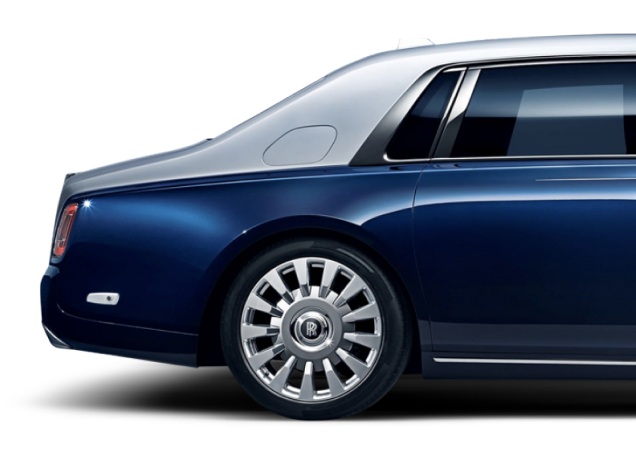
2012 Rolls-Royce PHANTOM Drophead Coupe Bijan Review, Specs, & Pictures
|
|
|
| NEWS & REVIEWS |
|
The man may have passed last year before he was able to see the latest automotive creations wearing his name, but that won’t stop Bijan and Rolls-Royce from selling a limited number of Bijan Phantoms for 2012. The cars are now a tribute to Bijan Pakzad’s designs—men’s fashion, jewelry, and fragrances among his specialties—and his renowned by-appointment-only House of Bijan boutique located on Rodeo Drive in Beverly Hills, California.
Bathed in Bijan Yellow, the Bijan Phantom Drophead Coupe is just one example of what can be produced. The bright exterior features a subtle paisley pattern on the hood—a pattern that comes from Persia, Pakzad’s country of origin. Yellow also adorns the interior and is highlighted by alligator skin decorated in paisley. The reptilian hide is just one of the many opulent features that can be ordered. For example, the Bijan Phantom Drophead Coupe features a large white-diamond-encrusted titanium time piece in the dashboard, a yellow mink throw in the backseat, an alligator suitcase and set of crystal glasses in a picnic set in the trunk, and a special compartment for a bottle of Bijan perfume. The price for these personalized touches is not cheap; the price of a Bijan Phantom begins at $850,000 but could skyrocket to $1,600,000 depending on the client’s desires.
Only 30 cars will be built, and each can be ordered in Phantom, Phantom Coupe, or Phantom Drophead Coupe forms.
Pakzad designed clothes for celebrities, the rich and famous, and many powerful men—including several of the U.S. presidents—out of what some have described as “the most expensive store in the world.” He was also an automotive enthusiast and owned a number of expensive exotics, including several Rolls-Royces. He died from a stroke in April 2011 before the in-the-flesh unveiling of his company’s collaboration with his favorite luxury automotive brand.
by Benjamin Greene
|
|
| PHOTOS: click photos to enlarge |
|
|
|
|
|
|
2011 Ford F-150 EcoBoost Review, Specs, & Pictures
|
|
|
| NEWS & REVIEWS |
|
After driving the 2011 Ford F150 with EcoBoost, we’ve got to say that it’s a pretty good truck for the price. We were really impressed with the truck’s turning radius, which was good when comparing it to other vehicles of its size. The interior is of a high quality and features intuitive controls with nice large dials and plenty of storage room including a deep center console. Below are snippets from Ford’s press release regarding the 2011 Ford F150 EcoBoost:
With its new 3.5-liter EcoBoost engine, the 2011 Ford F-150 will deliver best-in-class towing capability and torque with outstanding fuel economy.
The key technology built into every EcoBoost engine, including turbocharging and direct fuel injection, is particularly relevant to customers of the 3.5-liter EcoBoost truck engine.
This combination of turbocharging and direct fuel injection delivers a wealth of low-end torque and maintains it across a broad rpm range, which is key in towing applications. The 3.5-liter EcoBoost truck engine delivers 420 lb.-ft. of torque and 365 horsepower to enable best-in-class towing of 11,300 pounds – more than enough to tow a fully loaded three-horse trailer or 30-foot boat, for example. Plus the EcoBoost truck engine does it all on regular fuel and with outstanding fuel economy.
Up to 90 percent of the EcoBoost truck engine’s peak torque is available from 1,700 rpm to 5,000 rpm. A typical comparable V8 competitor reaches peak torque at higher engine speeds – around 4,000 rpm – and holds it for a much smaller range.
This EcoBoost truck engine also features twin independent variable camshaft timing, or Ti-VCT, to help save fuel. Ti-VCT provides extremely precise variable – yet independent – control of timing for intake and exhaust valves. Ti-VCT also reduces emissions, especially in situations when the throttle is partially open.
Independent adjustment of intake and exhaust valve timing allows maximum fuel economy at part-throttle, while delivering optimized power in full-throttle situations. An added benefit is improved driveability and responsiveness across the torque curve.
Every Ford truck engine undergoes a tortuous testing program, and the EcoBoost truck engine was no exception.
Three avenues that test and validate engines are computer analysis, laboratory testing and in-vehicle validation. For the 3.5-liter EcoBoost application in the 2011 F-150, that includes: All the tests together replicate more than 1.6 million miles of customer usage – the harshest-use customer. A customer profile reflecting extreme-use driving style, road types and vehicle usage, including maximum towing and payload situations, was developed to underpin the testing program.
The 2011 F-150 with EcoBoost will be available in early 2011
By Tabitha Foss
|
|
| PHOTOS: click photos to enlarge |
|
|
|
|
|
|
2011 Lincoln MKX Review, Specs, & Pictures
|
|
|
| NEWS & REVIEWS |
|
After driving the new 2011 Lincoln MKX, we’ve got to say that it is a pretty comfortable ride. It handles well but seems to lag a bit when accelerating. The interior was overall of a high quality, although the navigation system was a little touchy for our taste, and, like the Ford Sync system that the MyLincoln system is based, it did not understand any commands outside the exact phrases it was programmed to accept (where is Siri when you need her!). Below are snippets from Lincoln’s press release regarding the 2011 Lincoln MKX:
New, industry-exclusive technologies, engaging design featuring world-class craftsmanship and materials combined with class-leading power and fuel economy further elevate the 2011 Lincoln MKX midsize luxury crossover.
All-new MyLincoln Touch driver connect technology, which delivers a smarter, safer, simpler way to connect drivers with in-car technologies and their digital lives, leads the wide-ranging innovations. MyLincoln comes standard on the 2011 Lincoln MKX, providing drivers a whole new experience behind the wheel.
The dramatic freshening of the 2011 Lincoln MKX extends to all areas of the vehicle: New features and technologies not available anywhere else, new exterior design, new interior design with increased use of genuine materials, new powertrain with best-in-class power and fuel economy, improved driving dynamics, and new tires and wheels all combine to deliver an unparalleled luxury experience.
A wealth of upgrades means the 2011 Lincoln MKX will provide a more connected feel between the driver and the road through responsive acceleration, engaging steering, spirited handling and confident braking.
The new 18-inch tires have increased grip and are mounted on larger wheels than the outgoing product, helping enable enhanced stopping and improved handling. Twenty-inch wheels are available as well.
The springs, shocks and stabilizer bars also have been retuned to give the Lincoln MKX a flatter response through turns and over hills while still providing the comfortable ride luxury buyers expect and demand.
The original Lincoln MKX set many benchmarks in overall quietness, and that tradition continues as Ford internal data show the 2011 MKX scores better in such areas as speech recognition, wind noise and sound packaging than competitors from Lexus and Audi.
Both road noise and wind noise are significantly decreased in the 2011 MKX because of improvements found throughout the interior and exterior, including powertrain. Additional upgrades include:
Power for the 2011 Lincoln MKX is supplied by the 3.7-liter V6, which employs advanced technology and clever control strategies, such as twin independent variable camshaft timing (Ti-VCT), to increase horsepower and torque without compromising fuel economy.
Customers of the 2011 Lincoln MKX will enjoy a luxury crossover that has best-in-class power and torque versus all V6 competitors with best-in-class fuel economy of 19 mpg city and 26 mpg highway. That’s an increase of 1 mpg in each category. Horsepower has been increased to 305 – 40 more than the outgoing product (15 percent increase). Torque is increased 12 percent to 280 lb.-ft.
Improvements to engine hardware and powertrain control strategies account for the gains in power and fuel economy. Other strategies in addition to Ti-VCT are aggressive deceleration fuel shutoff, torque-based deceleration control and battery management.
By Tabitha Foss
|
|
| PHOTOS: click photos to enlarge |
|
|
|
|
|
|
2012 Cadillac CTS-V COUPE Review, Specs, & Pictures
|
|
| VIDEO: |
|
|
|
| NEWS & REVIEWS |
We walked away from our 2011 Cadillac CTS-V Coupe test car smitten with nearly every aspect of its design, performance, fit and finish, and technologies. So, when a 2012 model appeared in our parking lot last week, we were excited to reacquaint ourselves with what some of considered an old friend. Since little has changed externally from 2011 to 2012, we will only reiterate our initial feelings about the CTS-V Coupe: In our eyes, the lines on the CTS-V Coupe represent the best use of Cadillac’s Art and Science design language to date. The coupe is just drop-dead gorgeous. It is both cutting edge and classy. It takes the best angle of the sedan—the front—and adds the right curves and lines to the back and profile to make it an absolute stunner. It is shorter and lower than the sedan that spawned it. It also features a faster windshield rake, nearly flat rear window, and touchpad door openers that purge the need for conventional handles and give the profile a clean look.
Cadillac calls the CTS-V Coupe the “most dramatic model in the V-Series range of high-performance luxury models,” and, although it has been awhile since we set foot into the sedan or wagon, our memories remind us that it is also the best performing. It’s easy to understand why. The coupe weighs 13 pounds less than the sedan and a more astonishing 183 pounds less than the wagon. It also features shorter overhangs and a slightly wider rear track.
Like the sedan, the CTS-V Coupe wears a larger grille to increase the consumption of air and a raised aluminum hood to fit an Eaton Twin Vortices Series (TVS) supercharger onto the 6.2-liter V-8 engine. Together, the engine and supercharger produce 556 hp and a menacing 551 lb-ft of torque and, as you can see from the pictures, all-too-easy burnouts if the stability-control system is switched off. Cadillac claims a 3.9-second zero-to-60 time, and our in-seat impressions would agree. The engine can be connected to a Tremec six-speed manual or a Hydra-Matic six-speed automatic transmission. Our test cars have all been the automatic variety, and, although we would normally opt for the manual in our personal vehicles, we found exactly zero issues with the automatic.
Alongside the most powerful engine ever fitted under a Cadillac’s hood is a large assortment of performance-enhancing parts. These include Magnetic Ride Control, Brembo brakes—six-piston calipers at the front and four-piston calipers at the rear, a limited-slip rear differential, and Michelin Pilot Sport PS2 performance tires mounted on 19-inch forged aluminum wheels.
The CTS-V Coupe interior was also well received. It continues the outside’s angular styling complemented by a host of classy materials. But, by far the best part is the 14-way-adjustable Recaro driving seats with suede microfiber inserts. They do a remarkable job of cradling the two front occupants and providing excellent lateral support. Complementing the performance seating is a thick steering wheel.
Besides two new exterior colors—Black Diamond Tricoat and Opulent Blue Metallic—and a blind-side alert system, the Cadillac CTS-V moves into 2012 unchanged.
by Benjamin Greene
|
|
| PHOTOS: click photos to enlarge |
|
|
|
|
|
|
2013 Chevrolet CORVETTE 427 Convertible Collector Edition Review, Specs, & Pictures
|
|
|
| NEWS & REVIEWS |
The year 1953 introduced the first Corvette, and Chevrolet is already celebrating its 2013 60th anniversary with a special-edition package that helps bid farewell to the C6 Corvette as we prepare for the launch of the 2014 C7 Corvette. According to Chevrolet, the 2013 Corvette 427 Convertible Collector Edition is the fastest, most-capable convertible in Corvette’s 60-year history. How did it accomplish this feat? It dropped the Z06’s 7.0-liter (427) engine under the hood of its Corvette Convertible, endowing the open-top car with the 505 hp normally reserved for the fixed-roof Z06.
The 2013 Corvette 427 Convertible Collector Edition is just part of the celebrations as Chevrolet has announced that all 2013 Corvettes will feature 60th-anniversary badging; a more-decorative 60th-anniversary package will also be available for every model line. This package includes a ZR1-style spoiler, optional Pearl Silver Blue racing stripes, Arctic White paint, Blue Diamond leather and suede interior, and a blue top for the convertible models. Beyond the larger engine, the 427 Convertible Collector Edition car takes things further with Magnetic Selective Ride Control, the Z06’s rear axle, rear-mounted battery, and 19-inch front and 20-inch rear wheels wrapped in Michelin PS2 cup tires. These standard race-bred wear-quickly tires are normally options on the ZR1 and Z06. Black Cup wheels or chrome ZR1-style wheels are also available.
Reducing the convertible’s weight on the collector-edition package is several carbon-fiber components including a carbon-fiber hood, fenders, floor panels, and optional front splitter and rocker panels. Don’t be fooled into thinking this makes the car lighter than the other Corvette models, including its own fix-roof counterpart. The 427 Convertible Collector Edition weighs 3,355 pounds, which is 156 pounds heavier than the Z06 and 44 pounds more than the Grand Sport Convertible. GM points out that the 6.64 pounds of vehicle mass for every horsepower is still better than the Porsche 911 Turbo S Cabriolet (6.90), Audi R8 5.2 RSI Spyder (7.58), Aston Martin DBS Volante (7.82), and Ferrari California (8.31).
Available only with the six-speed manual transmission, the 427 Convertible delivers an estimated zero-to-60-mph time of 3.8 seconds, quarter-mile performance of 11.8 seconds, lateral acceleration of 1.04g, and a top speed of more than 190 mph.
The 2013 60th-anniversary package and 2013 Corvette 427 Convertible Collector Edition car will make their public debuts at the Barrett-Jackson auction in Scottsdale, Arizona, on January 21, 2012, and will arrive at U.S. Chevrolet dealers early this summer in 2LT, 3LT, and 4LT trim levels. Cost and availability have yet to be disclosed, but each car will carry a unique vehicle identification number sequence similar to the Corvette ZR1.
by Benjamin Greene
|
|
| PHOTOS: click photos to enlarge |
|
|
|
|
|
|